Test Results
Laboratory and field testing; results are updated as new data arrives.
Last updated: 1 September 2026
- Download reportLeak resistancePassed18 May 2026
Static leak resistance — 72 hours
240/240 packages held100%- Protocol
- Sealed packages were held for 72 h at 23 °C on absorbent substrate; leakage measured gravimetrically.
- Sample
- 240 packages, 4 production batches
- Result
- No measurable leakage in any sample (< 0.01 g).
- Download reportLeak resistancePassed30 May 2026
Post-drop leak resistance — 1.2 m
118/120 kept integrity98%- Protocol
- Filled, sealed packages were dropped from 1.2 m onto concrete at three different angles.
- Sample
- 120 packages
- Result
- 118 packages held. 2 samples showed micro-opening at the seam; layer weight was raised to 45 gsm.
- Download reportOdour controlPassed4 June 2026
Odour emission — H₂S and NH₃
Below odour threshold96%- Protocol
- A sealed package was kept in a 1 m³ chamber for 24 h; hydrogen sulphide and ammonia concentrations were measured hourly.
- Sample
- 30 cycles, 3 temperatures (5/23/40 °C)
- Result
- After 24 h, H₂S < 0.5 ppb and NH₃ < 0.3 ppm — both below the human odour threshold.
- Sealing mechanismPassed22 April 2026
Sealing mechanism — time and repeatability
Sealed in 2.4 s on average100%- Protocol
- 500 sealing cycles were recorded with a high-speed camera; mouth closure time was measured frame by frame.
- Sample
- 500 cycles
- Result
- Mean 2.4 s (min 2.1 / max 2.9). No incomplete seal in any cycle.
- Cycle lifeIn progress1 July 2026
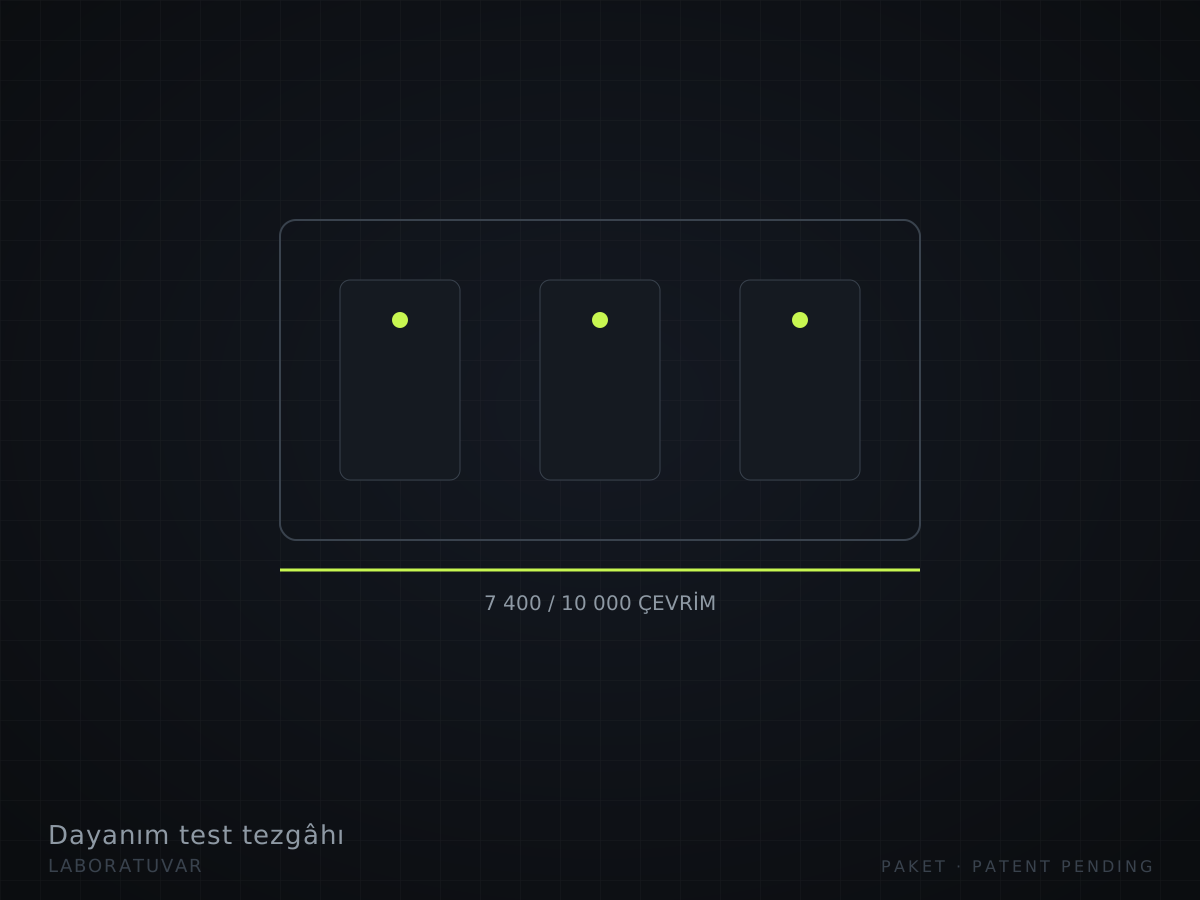
Cycle-life endurance test
7,400 / 10,000 cycles done74%- Protocol
- An automated rig runs 24/7 towards a 10,000-cycle target; elastic ring tension loss is measured every 500 cycles.
- Sample
- 3 units in parallel
- Result
- At 7,400 cycles, tension loss is 4.1% — far below the 15% acceptance limit. Test ongoing.
- Download reportDurabilityPassed14 March 2026
Body durability — load, impact, temperature
All bodies passed100%- Protocol
- 250 kg static load, 5 J impact and 20 thermal cycles between −30 °C and +60 °C.
- Sample
- Aluminium, steel, composite and polymer bodies
- Result
- No permanent deformation or mechanism failure.
- User testingPassed20 June 2026
User test — first use
46/50 succeeded first try92%- Protocol
- 50 participants who had never seen the product attempted bag loading and package removal without a manual.
- Sample
- 50 participants, aged 18–71
- Result
- 46 participants completed both tasks on the first attempt. Mean bag change time: 12 seconds.
- Field testingIn progress8 July 2026
Field test — caravan and construction site
4 of 6 sites reporting60%- Protocol
- Real-world use across 6 sites for 90 days; daily cycle count, faults and user feedback are logged.
- Sample
- 6 sites · ~2,800 cycles
- Result
- No faults reported at the first 4 sites. Feedback showed the bag magazine was too small for construction use — this is why the 100-bag cartridge exists.
- Odour controlPlanned1 September 2026
Long-term odour — 30-day sealed chamber
- Protocol
- Packages held in a sealed chamber for 30 days with weekly gas measurement.
- Sample
- Planned
- Result
- Test begins September 2026.